
Foremilk vs Hindmilk: The Hidden Secret of Breastfeeding Every Mother Should Know
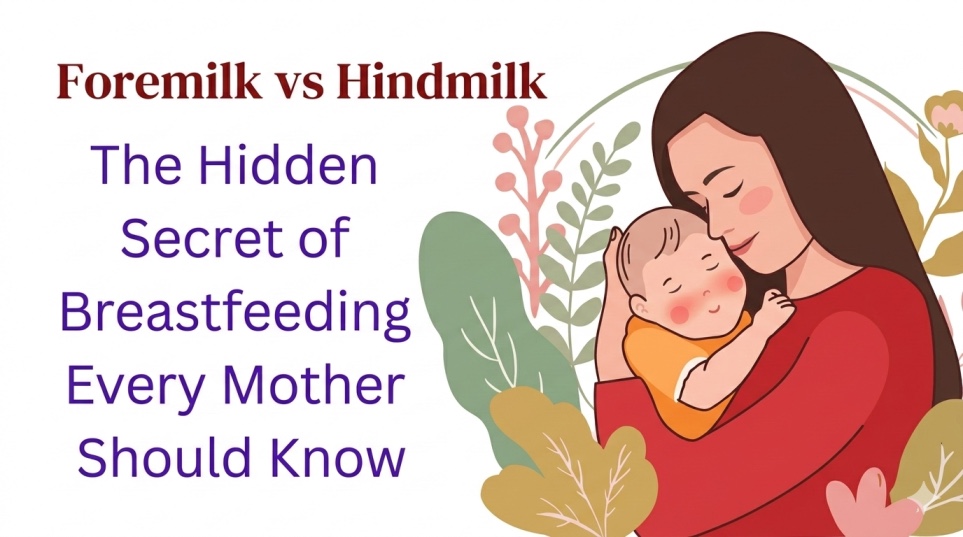
Foremilk and Hindmilk are two phases of breast milk that come during a single breastfeeding session. Understanding them is helpful for infant nutrition and managing breastfeeding issues.
1. Foremilk
- Definition: The milk that comes at the beginning of a breastfeeding session.
- Characteristics:
- Thin and watery
- Higher in lactose
- Lower in fat
- Thin and watery
- Function:
- Mainly hydrates the baby
- Provides quick energy through lactose.
- Mainly hydrates the baby
2. Hindmilk
- Definition: The milk that comes later in the same feeding session after the breast has been partially emptied.
- Characteristics:
- Thicker and creamier
- Higher fat content
- Higher calories
- Thicker and creamier
- Function:
- Provides satiety and weight gain
- Important for growth and brain development.
- Provides satiety and weight gain
Why this matters clinically
If a baby switches breasts too quickly, the baby may get mostly foremilk and less hindmilk.
This can cause:
- Green, frothy stools
- Gas and colic
- Poor weight gain
This condition is sometimes referred to as Foremilk‑Hindmilk Imbalance (more common in mothers with oversupply).
Practical breastfeeding advice
- Allow the baby to finish one breast completely before offering the other.
- Let the baby feed for at least 10–15 minutes on one breast.
- Look for signs the breast is softer before switching.
Advice for Mothers:
“At first the milk is watery to remove the baby’s thirst, then the thick milk comes which helps the baby gain weight. So always let the baby finish one breast before changing.”